How COVID-era censorship exposed the danger of building on rented land
Table of Contents
- Social Media Control Wake-Up
- Followers Are Not Freedom
- The Trap of Rented Land
- Why People Fall for It
- What Real Ownership Means
- Use Platforms, Not Depend
- Build Digital Assets
- Escape Social Media Control
- Build What They Can’t Take
There was a time when people thought a big social media following meant they had built something solid.
It looked solid.
A big YouTube channel looked like an asset.
A strong Facebook page looked like momentum.
A growing Instagram account looked like proof.
A loyal audience on TikTok looked like security.
Then COVID hit.
Suddenly, people watched accounts disappear. Videos were removed. Reach dropped off a cliff. Channels were demonetised. Communities were fractured. In some cases, years of work vanished because someone said the wrong thing, questioned the wrong narrative, or stepped outside what the platforms were prepared to tolerate.
That was not just a weird chapter in internet history.
It was a warning shot.
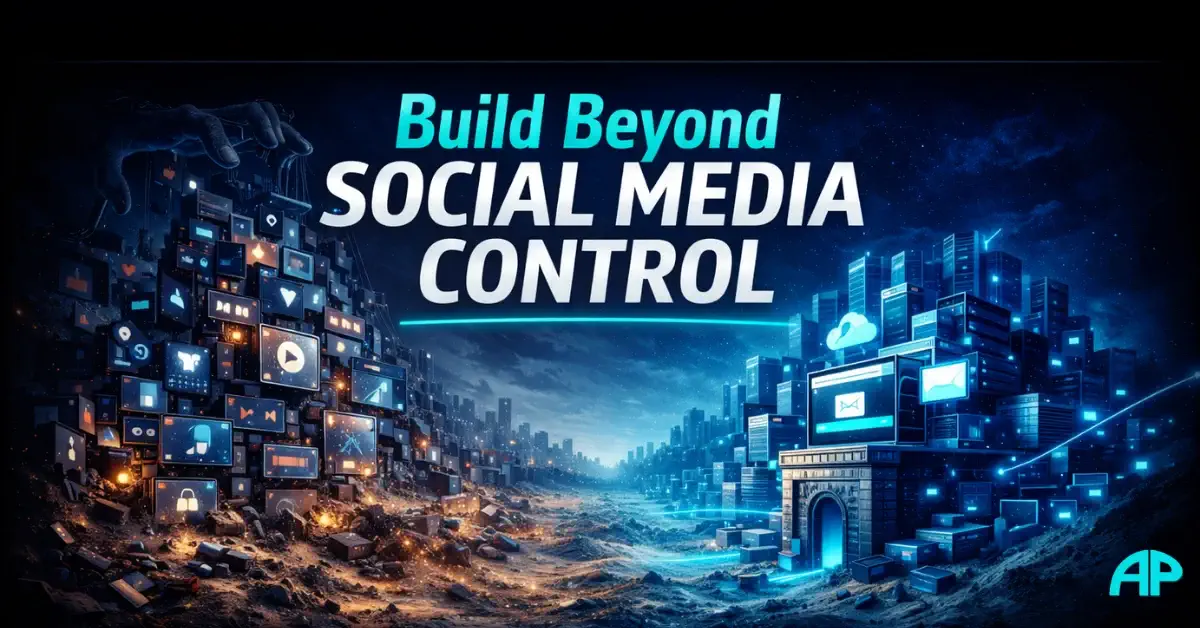
The COVID years exposed a truth that too many people still ignore. If your entire brand lives on a platform you do not control, then your business is built on unstable ground. It may feel safe while the likes are flowing and the views are climbing, but the moment the rules change, that so-called foundation can crack.
That is why social media control matters.
This is not just about politics. It is not just about outrage. It is about control. It is about ownership. It is about whether you are building something real or simply borrowing attention from a system that can turn on you at any time.
Social Media Control Was the Real Wake-Up Call
For years, people were told to build on social media.
Post more.
Go viral.
Grow your following.
Chase engagement.
Feed the algorithm.
On the surface, it made sense. Social platforms gave people a fast way to get noticed. They could publish content, build an audience, and create momentum without needing much money or technical skill.
Then the pressure test came.
COVID censorship showed the world how quickly mainstream platforms could tighten the screws. It did not matter whether someone had a small following or a large one. It did not matter whether they were a doctor, a commentator, a health coach, or a regular person asking questions. Once the boundaries were set, stepping outside them carried consequences.
Some people lost a post.
Some lost their reach.
Some lost income.
Some lost entire accounts they had spent years building.
That should have shaken more people than it did.
Because once you have seen that happen, it becomes very hard to pretend these platforms are a safe long-term home for your brand. The whole period exposed how much social media control the platforms really had.
Followers Are Not Freedom Under Social Media Control
This is one of the biggest illusions online.
People confuse visibility with security.
They see someone with fifty thousand followers and assume that person has built a strong business. They see a polished feed and think that person must be in control. They see big engagement numbers and assume that audience belongs to the creator.
It does not.
Not really.
You are borrowing access to those people through a platform. That platform controls the algorithm. It controls discovery. It controls policy. It controls what gets seen, what gets buried, and in some cases, what gets removed altogether.
You may have an audience, but you do not truly own your audience until you can reach them without asking a third party for permission.
That is a huge difference.
A social profile can look impressive while being incredibly fragile. A person can have years of content, thousands of followers, and solid engagement, yet still be one policy update away from watching it all wobble or collapse.
That is why social media control matters so much.
It is not just about what you can post. It is about whether your entire business is exposed to decisions you do not make.
Build on Rented Land and Social Media Control Wins
The phrase is simple because the truth is simple.
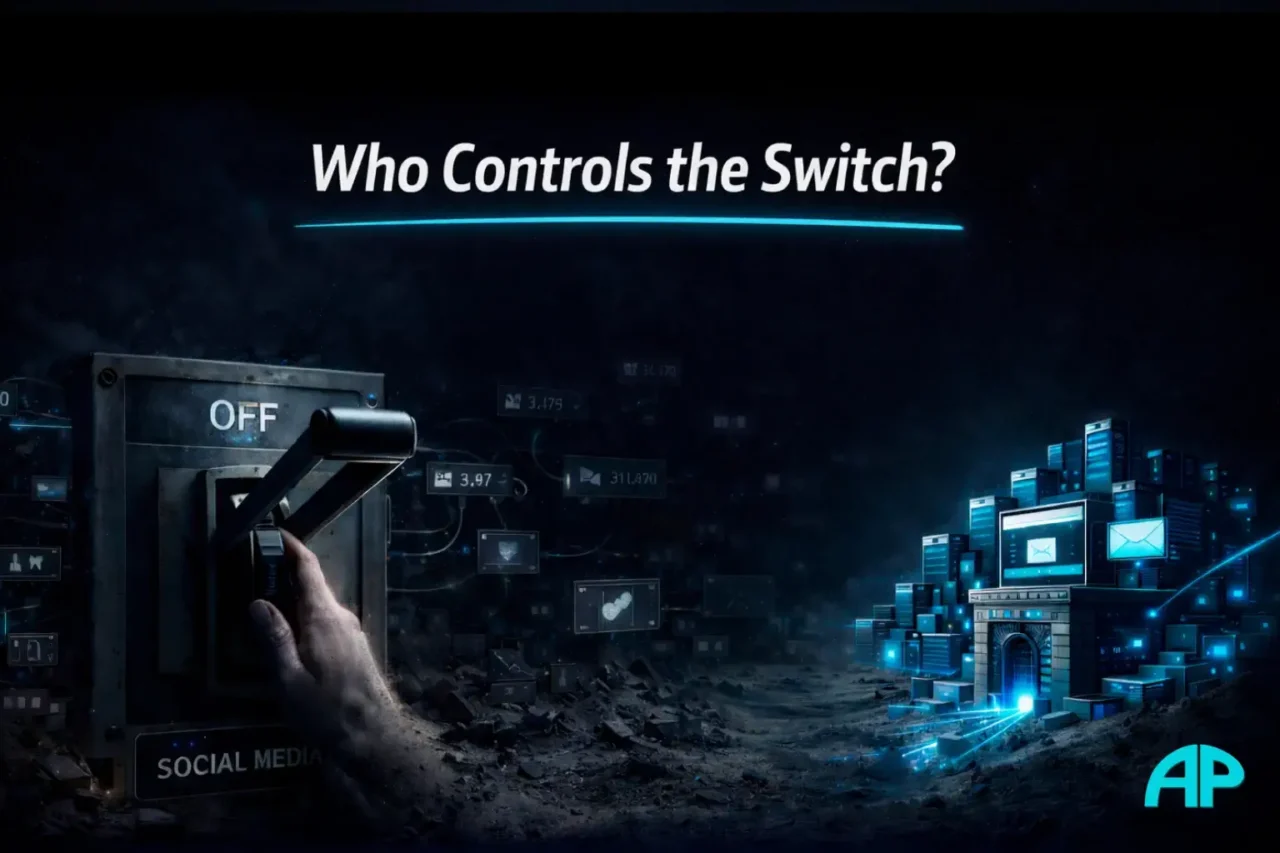
If you build on rented land, the landlord makes the rules.
That is exactly what happened during the COVID years. People who had poured time, energy, creativity, and trust into mainstream platforms discovered they were tenants, not owners. They could be restricted, throttled, suspended, or erased, often with little recourse and no real leverage.
And yet, even after seeing this firsthand, many still keep building the same way.
Why?
Because social media is seductive.
It is fast.
It is visible.
It gives instant feedback.
It makes people feel like they are moving forward.
A website feels slower.
An email list feels less exciting.
A long-term brand strategy feels less glamorous than chasing views.
But the slower path is often the smarter one.
Building a real business is not about looking busy. It is about building assets that get stronger with time. A website can grow in authority. A blog can attract search traffic for years. An email list can become a direct line to people who actually want to hear from you. A product can keep selling long after a post stops trending.
That is what real stability looks like, and it is the opposite of living under constant social media control.
Why People Still Accept Social Media Control
Part of the problem is that social media gives the illusion of progress.
You can post today and get feedback today. You can go live and get attention straight away. You can watch the numbers move and tell yourself you are building something meaningful.
Sometimes you are.
But sometimes you are just feeding a machine that can cut you off tomorrow.
That is the part many people do not want to face.
They keep telling themselves this time will be different. They think if they stay safe, stay polished, and stay within the lines, they will be fine. Maybe they will. Maybe they will not. The point is that they are still dependent.
That is not a position of strength.
It is also worth saying that platform censorship is not always loud and obvious. Sometimes it is not a deletion. Sometimes it is reduced reach. Sometimes it is demonetisation. Sometimes it is quiet suppression that slowly drains your momentum while you sit there wondering what changed.
That can be even more dangerous because it leaves people second-guessing themselves while the platform still holds all the cards.
What Real Ownership Looks Like Beyond Social Media Control
Owning your audience changes everything.
It means building a website that acts as your home base, especially if you are serious about building digital assets that pay long term.
It means creating content that lives on your domain.
It means building an email list that lets you speak directly to people.
It means having offers, products, and systems that are not fully dependent on a platform staying friendly.
This is where smart brand builders separate themselves from content chasers.
They understand that social media should support the business, not be the business.
That does not mean you abandon these platforms. It means you use them with your eyes open.
Use YouTube to get discovered.
Use Facebook to start conversations.
Use Instagram to create interest.
Use TikTok to capture attention.
But do not stop there.
Move people to your site.
Move people to your email list.
Move people to your own community.
Move people to something you control.
That is how you start to own your audience in a meaningful way and reduce your exposure to social media control.
Because once someone joins your list, reads your blog, buys your product, or becomes part of your private community, the relationship becomes far more durable than a passing social follow.
Use Platforms but Escape Social Media Control
This is the mindset shift that matters most.
Social media is a tool.
It can help you get traffic.
It can help you build awareness.
It can help you connect with people.
It can even help you grow fast.
But it should never be the entire strategy.
If the COVID censorship years taught us anything, it is that platforms can become hostile fast. They can shift their standards overnight. They can decide what is acceptable, what is risky, and what deserves to disappear. Whether you agree with those decisions or not, the lesson is the same.
Do not hand over your entire future to a platform.
And while some people swing to the other extreme and put blind faith in alternative platforms, that is not the answer either. Swapping one platform for another is still dependence if you have not built anything underneath it.
The smarter move is diversification.
Use more than one channel.
Use more than one traffic source.
Use more than one way to connect with your audience.
Build a brand that can survive change.
That is not paranoia.
That is common sense.
And it is the smartest response to social media control.
Build Digital Assets That Outlast Social Media Control
This is where the conversation becomes exciting.
Because once you stop obsessing over followers and start focusing on digital assets you control, the whole game changes.
A good blog post can bring traffic for years.
A useful lead magnet can grow your list while you sleep.
A solid website can become your authority hub.
An email sequence can build trust at scale.
A strong brand can carry you across platforms instead of being trapped inside one, which is exactly why personal branding matters more than ever.
This is how real leverage is built.
Not from borrowing attention forever, but from turning that attention into something tangible and lasting.
That is why the people who survive long term are usually not the ones making the most noise. They are the ones quietly building foundations. They are stacking assets. They are creating systems. They are thinking ahead.
They understand that trends come and go. Platforms rise and fall. Algorithms change. Narratives shift. Public pressure moves. But a strong brand with owned assets has a much better chance of riding out the chaos.
The Lesson Social Media Control Should Have Taught Everyone
COVID should have been the moment that changed how people think about building online.
It should have forced more creators, business owners, coaches, marketers, and thought leaders to ask themselves one simple question:
What do I actually own?
Not what do I post.
Not how many followers do I have.
Not how many views did I get this week.
What do I own?
If the answer is not much beyond a few social profiles, then there is work to do.
Because the truth is brutal.
If someone else can switch off your reach, restrict your account, or erase your years of work with the click of a button, you have not built a stable business. You have built a presence inside somebody else’s system.
That might be fine for a season.
It is not fine as a long-term strategy.
Build Something They Cannot Take
This is the part where the reader should feel both challenged and empowered.
Yes, the platforms are useful.
Yes, they can help you grow.
Yes, they can open doors.
But do not confuse access with ownership.
Do not confuse visibility with safety.
Do not confuse followers with freedom.
The smarter path is clear.
Use the platforms.
Take the attention.
Build trust.
Then move people onto assets you control.
Build a website.
Build an email list.
Build a brand.
Build products.
Build archives.
Build digital assets that pay.
Because when the next big pressure test comes, and one day it will, the people who built only on rented land will feel that same panic all over again.
The people who built something real will be in a much stronger position.
That is the lesson.
Not just from COVID censorship. Not just from platform censorship. From the entire online game of social media control.
Stop building a profile and calling it a business.
Start building something they cannot take from you.