
Billions are being burned on AI, but the real question is whether the payoff will outrun the cost.
Table of Contents
- Why AI Feels Expensive
- What AI Companies Sell
- How AI Makes Money
- The Energy Cost of AI
- Is AI Sustainable
- Final Thoughts
Will AI send us broke? It is a fair question, and more people are starting to ask it. Billions of dollars are being poured into chips, data centres, research, software, and electricity, which makes many wonder whether this technology boom is sustainable or whether it is quietly becoming a financial monster.
That concern is not crazy.
Every few months there is another headline about massive losses, giant valuations, endless fundraising, or another company racing to build faster, bigger, more powerful models.
From the outside, it can look insane.
So let’s cut through the noise.
Why AI Feels Like a Financial Black Hole
The first thing to understand is this:
AI is not cheap software.
It is infrastructure.
That changes everything.
Most normal software businesses are relatively light once they are built. They need developers, support, servers, and marketing, but they do not usually require mind-bending levels of capital just to keep the engine running.
AI is different.
Large language models need expensive chips, vast computing power, huge storage systems, specialist engineers, and ongoing training. Then there is the cost of serving those models to millions of users every day.
That means the money is not just spent once.
It keeps getting spent.
Every prompt, every image, every voice interaction, every agent task, and every business workflow running on top of AI has a cost behind it. Some of that cost is becoming more efficient over time, but the scale is still enormous.
That is why people are asking whether this whole thing becomes unsustainable.
So What Is the Offering?
This is where many people get confused.
They see the losses and assume there is no real business model.
That is not quite true.
The offering is actually pretty simple.
AI companies are trying to become the new layer that sits underneath everyday work, communication, search, software development, customer service, research, and business automation.
In other words, they do not just want to be clever chatbots.
They want to become essential.
That is the play.
If an AI company can become the tool people use daily to write, code, search, plan, analyse, design, automate, and solve problems, then the revenue opportunities become massive.
That is why the current race is so aggressive.
They are not fighting over novelty.
They are fighting over position.
How Are AI Companies Going to Make Money?
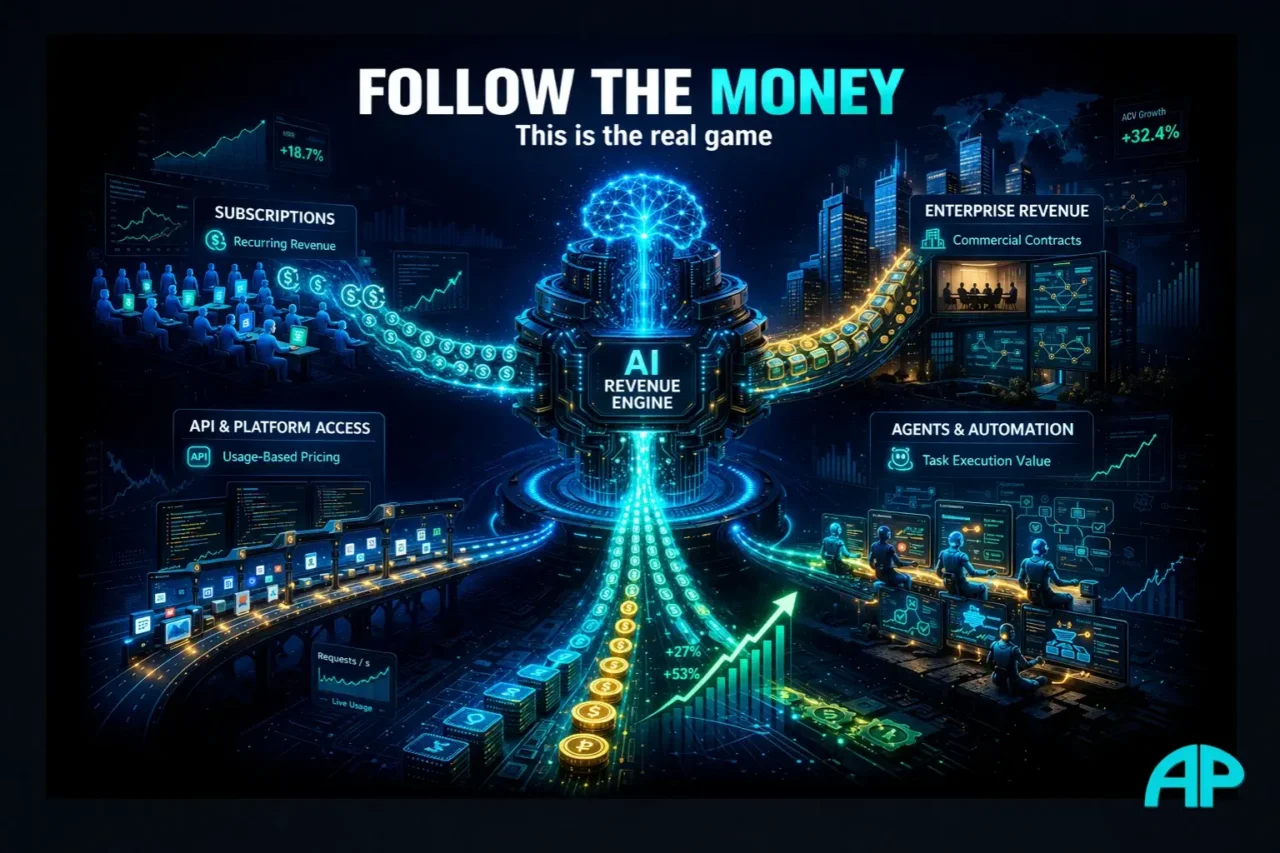
This is the part that matters most.
If AI is going to survive financially, it needs more than hype. It needs real income.
Here are the main ways these companies are trying to make money.
1. Subscriptions
This is the obvious one.
Consumers pay monthly for better access, more features, faster responses, better models, and premium tools.
That may not sound dramatic, but at scale it adds up quickly.
Millions of people paying every month creates serious recurring revenue.
2. Enterprise Plans
This is where the big money is.
Businesses will pay far more than casual users if AI saves time, cuts staff load, improves output, or makes internal systems more efficient.
A company that can help a business save hours every week becomes far more valuable than a tool used for casual entertainment.
This is why enterprise adoption matters so much.
It is sticky.
It is recurring.
And it can scale hard.
3. API Access
This is where developers and other businesses plug AI models into their own apps, services, and tools.
Instead of building everything themselves, they pay for access.
This can create a toll-road business model.
Every time another company builds on top of a major model provider, money flows back to that provider.
4. Agents and Automation
This is likely where things get very interesting.
If AI moves beyond answering questions and starts completing real tasks, managing systems, handling operations, and replacing chunks of human labour, the commercial value rises fast.
That is when AI stops being impressive and starts becoming economically powerful.
And that is what many of these companies are betting on.
We are moving past the stage of AI being a novelty and into the stage where real performance starts to matter, especially in coding, automation, and business execution.
That is exactly why posts like DeepSeek V4 Is Not Here to Play Small matter, because they show how fast this race is moving and why the commercial stakes are getting bigger by the month.
But What About the Energy Cost of AI?
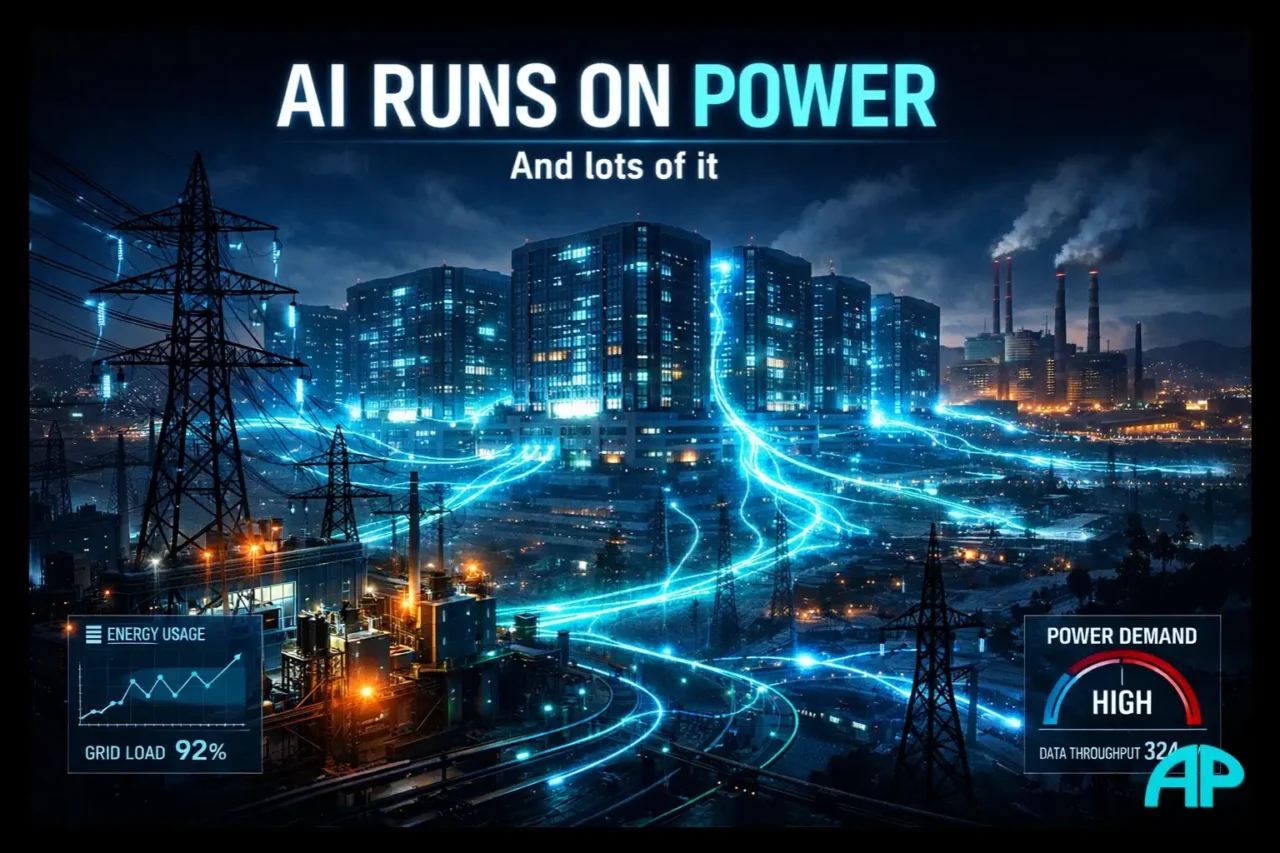
This is not a side issue.
It is central.
AI runs on compute, and compute runs on energy.
So yes, the electricity demand is a serious part of this conversation.
Data centres are already consuming massive amounts of power, and AI is pushing that further. More models, more users, more inference, more training, more automation. It all adds up.
That means AI is not just a software story.
It is also a power story.
A grid story.
A data centre story.
A hardware story.
This is why some people worry that AI will send us broke if the appetite for compute keeps growing faster than the value being created.
The real test is whether the value created by AI becomes greater than the cost of running it.
If it does, the spending will be justified.
If it does not, some players will get wiped out.
Is AI Financially Sustainable?
That depends on who you are talking about.
The industry as a whole?
Probably yes.
Every company in the space?
Definitely not.
There will almost certainly be winners and losers.
Some companies will raise mountains of cash, burn through it, fail to build a real moat, and disappear.
Others will survive because they become deeply embedded in business workflows, attract sticky paying customers, and keep reducing the cost of delivering value.
That is the key.
Not just intelligence.
Useful intelligence at a cost that makes economic sense.
That is what will separate serious businesses from expensive experiments.
Is AI Going to Send Us Broke?
Not in the dramatic end-of-the-world sense.
But it could absolutely create distortions.
It could inflate bubbles.
It could lead to overinvestment.
It could crush weaker companies.
It could force huge spending on infrastructure, power, and chips before the full return is clear.
So no, will AI send us broke is probably not the right way to frame the future of the whole economy.
But it may send some companies broke.
It may burn investors.
It may trigger a shakeout.
And it may expose just how expensive it is to build the next layer of the digital economy.
That said, history shows that major technology shifts often look wildly uneconomic in the early stages. Railways, telecom, the internet, and cloud all required heavy spending before the winners emerged.
AI may follow the same path.
Final Thoughts
The smarter question is not whether AI is expensive.
It is.
The smarter question is whether AI can create enough value to justify the cost.
That is what the next few years will decide.
Right now, the industry is spending like crazy because it believes AI will become foundational to the future of work, business, and digital life.
If that belief is right, today’s losses may look like the price of building something enormous.
If that belief is wrong, then a lot of money is going to vanish.
Either way, we are not watching a normal software boom.
We are watching a full-scale economic land grab.
And that is why so many people are still asking, will AI send us broke?